Perseverance Rover Captures Stunning 360-Degree Panorama of Ancient Martian Terrain 'Crocodile Bridge'
NASA's Perseverance rover has delivered a breathtaking 360-degree panorama of a region nicknamed 'Crocodile Bridge' on the rim of Jezero Crater, offering an unprecedented window into the Red Planet's ancient past. The mosaic, composed of 980 images taken in December 2025 and January 2026, reveals some of the oldest rocks in the solar system—remnants of a time when Mars' crust and atmosphere were still forming.
'Crocodile Bridge represents a gateway to rocks that hold clues to Mars' early history, a period we can't study on Earth because our planet's tectonic plates constantly recycle the surface,' said Dr. Ken Farley, project scientist for the Perseverance mission at NASA's Jet Propulsion Laboratory.
Background
Jezero Crater's rim and surrounding highlands preserve terrain that is billions of years old. Unlike Earth, Mars lacks tectonic plates, allowing ancient material to remain intact. The 'Crocodile Bridge' area marks the transition into a region scientists call 'Lac de Charmes,' which Perseverance will explore over several months later this year.
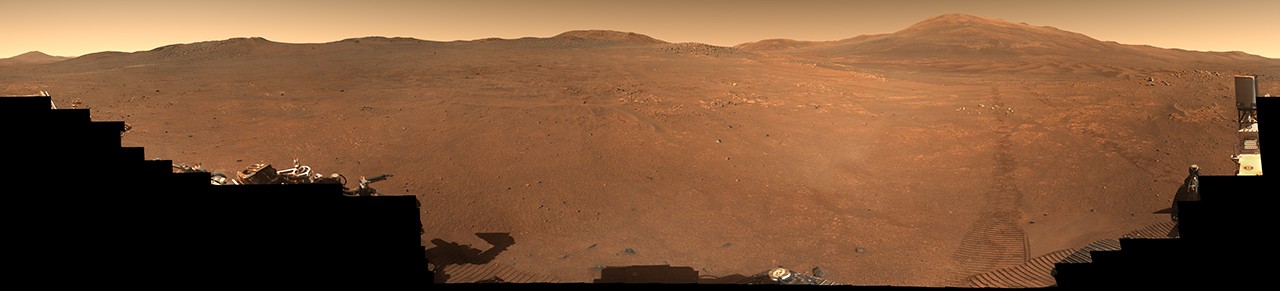
The panorama was captured using the rover's Mastcam-Z camera system. Natural-color processing shows the landscape as the human eye would see it, while enhanced-color and 3D anaglyph versions reveal subtle geological details.

What This Means
The 'Crocodile Bridge' panorama is more than a stunning image—it is a scientific treasure map. The rocks here are time capsules from the Noachian period, over 3.5 billion years ago, when Mars had a thicker atmosphere and liquid water on its surface. By studying these rocks, scientists hope to determine whether Mars ever hosted life and understand how terrestrial planets evolve.
'Each image gives us a front-row seat to Martian history,' said Dr. Farley. 'The team is eager to drill samples from these ancient formations for future return to Earth.' The rover's ongoing traverse into Lac de Charmes will focus on layered sediments and potential biosignatures.
Perseverance has been exploring Jezero Crater since landing in February 2021. Its mission includes searching for signs of ancient microbial life, collecting rock samples, and testing technologies for future human exploration. The 'Crocodile Bridge' survey adds a critical chapter to that story.
For more details, visit NASA's Perseverance mission page.
Related Articles
- Breaking: May 2026 Skywatching Alert – Rare Blue Moon, Meteor Shower Peak, and Venus-Moon Showdown
- Navigating the Moon's Colossal Crater: A How-To Guide for Artemis Mission Planners
- The Financial Web: How Tesla Gained $573 Million from SpaceX and xAI in 2025
- How to Unravel the 50-Year Plant Immunity Puzzle: Decoding Debneyol's Blueprint
- Why the Moon's Darkest Craters Are Ideal for Next-Gen Laser Navigation Systems
- Space Combat Sim 'In The Black' Launches Demo, Promises True Newtonian Physics from Veteran Developers
- Asteroid Apophis: 10 Crucial Facts About the Potentially Hazardous Space Rock and the Mission to Protect Earth
- 10 Essential Heroes and Villains of 'Masters of the Universe' You Need to Know