Unveiling Financial Webs: A Step-by-Step Guide to Analyzing Related-Party Transactions in Corporate Filings
Overview
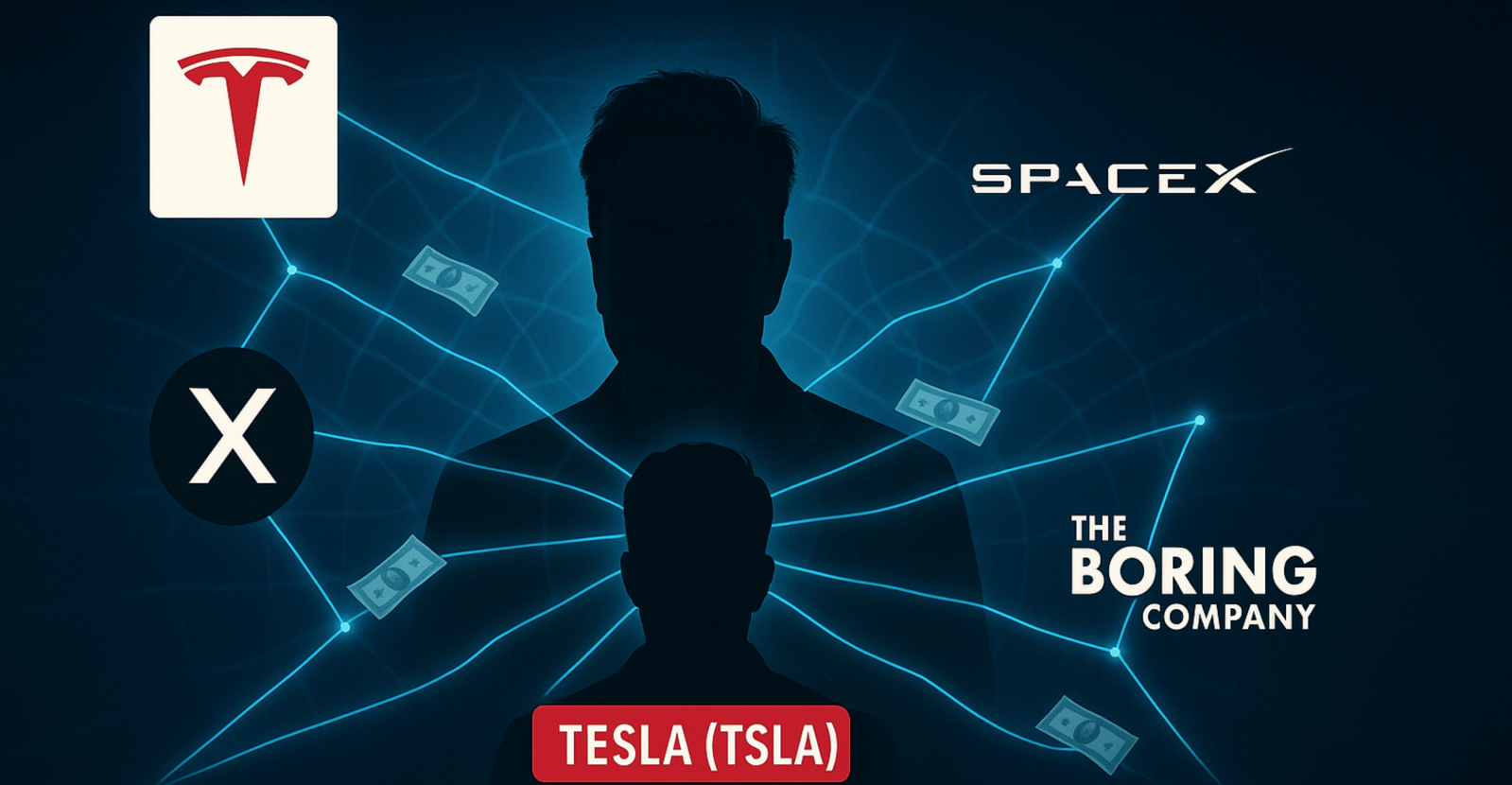
When a CEO also controls multiple other companies, the potential for financial entanglements grows. Regulators require public firms to disclose these related-party transactions transparently. A prime example is Tesla’s April 30 amended annual filing (10-K/A) with the SEC, which laid out $573 million in revenue from Elon Musk’s SpaceX and xAI alone, plus additional expenses flowing to X, The Boring Company, and Musk’s personal security firm. This tutorial walks you through how to dissect such filings to identify, quantify, and understand the financial web between a company and its insiders. You’ll learn to navigate SEC documents, interpret disclosure notes, and draw actionable insights — using Tesla’s case as a real-world model.
Prerequisites
What You’ll Need
- Access to SEC EDGAR database (www.sec.gov/edgar) – free and public
- Basic financial literacy: understanding of revenue, expenses, and profit/loss statements
- A spreadsheet tool (Excel or Google Sheets) for organizing data
- Patience to read footnotes – the most valuable details hide there
Knowledge Assumed
- Familiarity with the 10-K annual report structure (Business, Risk Factors, Financial Statements, Notes)
- Understanding of what a “related party” means (executives, board members, their close family, and entities they control)
Step-by-Step Instructions
Step 1: Locate the Relevant Filing
Go to the SEC EDGAR search page. Enter the company ticker (e.g., TSLA for Tesla). Narrow the filing type to “10-K/A” — the “/A” suffix indicates an amendment. In our case, find the 10-K/A filed on April 30. Tesla’s original 10-K was released earlier this year; the amendment added new details about intercompany revenue and expenses.
Step 2: Open the Filing and Navigate to the “Related Party Transactions” Note
Most 10-K/A documents contain a section called “Related Party Transactions” (often Note 16 or later). Use the browser’s find function (Ctrl+F) for “related party”. Tesla’s amendment highlights a total of $573 million in revenue from SpaceX and xAI, plus millions in expenses to other Musk entities. Look for tables that list counterparties, amounts, and the nature of the transaction (e.g., services, purchases, reimbursements).
Step 3: Categorize the Transactions
Break down the numbers into two main streams: revenue (money coming into Tesla) and expenses (money going out). For Tesla:
- Revenue from related parties: SpaceX ($XXX million – exact figure in filing), xAI ($XXX million) → combined $573M.
- Expenses to related parties: Payments to X (formerly Twitter), The Boring Company, and a personal security firm for the CEO.
Record each line in your spreadsheet with columns: counterparty, direction (revenue/expense), amount, service description. This structured view reveals the web.
Step 4: Interpret the Revenue Figures
Why does SpaceX pay Tesla? Often for components, engineering services, or licensing agreements. Check the narrative in the filing. The text may state: “Tesla provides battery packs and powertrain components to SpaceX for use in rocket-related applications”. Similarly, xAI may purchase computing or AI-related services from Tesla. Revenue from related parties is still real revenue, but it can inflate top-line numbers if over-relied upon. Compare it to Tesla’s total revenue to gauge impact.
Step 5: Examine the Expense Side
Expenses to Musk’s other companies raise questions about market pricing and potential conflicts. For example, payments to X could be for advertising services or data access. The filing might disclose that these were “at arm’s-length” or “negotiated under terms similar to third-party arrangements”. Verify by searching for disclosure language about pricing policies. Also note the personal security firm – such expenses are typically covered as a benefit for the CEO, but should be clearly justified.
Step 6: Check for Incremental Disclosures in the 10-K/A
Amended filings often add new footnote items or expand existing ones. Compare the original 10-K with the amended version (using the “difference” view on EDGAR if available). Look for any changed amounts, new counterparties, or clarifications. In Tesla’s case, the amendment may have revised previous estimates or added previously omitted transactions.

Step 7: Quantify the Materiality
Materiality threshold varies by company size. For Tesla (revenue >$80B in 2024), $573M is less than 1% of total revenue, but still a material footnote because it involves the CEO. Calculate the percentage: % of Total Revenue = Related Party Revenue / Total Revenue * 100. Similarly for expenses. If the total is significant relative to net income, it warrants investor attention.
Step 8: Cross-Reference with Other Company Filings
To complete the picture, look at the filings of SpaceX and xAI (if publicly available, though SpaceX is private; its debt filings or Musk’s statements may help). Confirm that the amounts reported by Tesla match what the other side reports. This step is advanced but validates the web.
Step 9: Summarize the Implications
Ask: Does the web facilitate innovation (shared resources) or raise governance risks? Document your findings:
- Total intercompany revenue: $573M
- Key counterparties: SpaceX, xAI, X, Boring Company
- Potential conflicts: CEO sits on both sides of transactions
- Mitigating factors: disclosures of arm’s-length pricing, board approval
Common Mistakes
Overlooking the Footnote Narrative
The numbers alone don’t tell the story. The text describing the nature of the transaction is critical. For example, a payment to a security firm might be a routine expense, but if it’s personal security for the CEO, it could be a perk.
Ignoring the 10-K/A Amendment
Many analysts only read the original 10-K. The amendment often contains late-breaking revelations. Always check for amendments filed within 45 days after the original deadline.
Assuming All Related-Party Transactions Are Negative
Not all intercompany deals are problematic. They can reflect efficient resource sharing. The key is transparency and fairness. Use the disclosure quality to judge.
Mixing Up Revenue and Expense Directions
Double-check who pays whom. A common error is to think Tesla pays SpaceX, when in fact SpaceX pays Tesla. The direction changes the impact on Tesla’s profitability.
Forgetting to Compare Year-Over-Year
Unless the tutorial explicitly covers trends, users often forget to look at prior years. Compare the $573M to previous years to see if the web is growing or shrinking.
Summary
Analyzing related-party transactions in SEC filings reveals the hidden financial ties that bind a CEO’s corporate empire. Using Tesla’s 10-K/A as a guide, you learned to locate the filing, parse the “Related Party” note, categorize revenue and expenses, and assess materiality. The $573 million web between Musk’s companies demonstrates how a single leader’s cross‑holdings can generate both synergies and scrutiny. By following these steps — and avoiding common pitfalls like ignoring footnotes or amendments — you can independently evaluate any public company’s insider dealings. Always stay curious about the stories behind the numbers.
Related Articles
- How to Forge a Career in RF Engineering and Wireless Innovation: Lessons from a Young Professional Award Winner
- Anthropic's Surprising SpaceX Deal Doubles Claude Code Limits
- Dreame Unveils Rocket-Powered EV Promising 0-60 in 0.9 Seconds – Claims Met With Skepticism
- GRASP: Efficient Gradient-Based Planning for Long-Horizon World Models - FAQ
- Transforming R&D with Agentic AI: Inside Microsoft Discovery
- Amazon WorkSpaces Grants AI Agents Direct Access to Legacy Desktop Applications — No Modernization Required
- How to Protect Your Gut from the Double Hit of Stress and Late-Night Eating
- NISAR Satellite Reveals Alarming Subsidence Rate in Mexico City: A Collaboration Between NASA and ISRO