Mastering Python Metaclasses: A Comprehensive Tutorial
Overview
Python metaclasses are one of the language's most powerful—and often misunderstood—features. At their core, metaclasses are the “classes of classes.” Just as an ordinary class defines the behavior of its instances, a metaclass defines the behavior of classes themselves. This tutorial will guide you through the concept, showing how classes are objects, how type creates them, and how you can build custom metaclasses to control class creation. We'll also discuss when it's appropriate to reach for a metaclass versus using simpler alternatives.
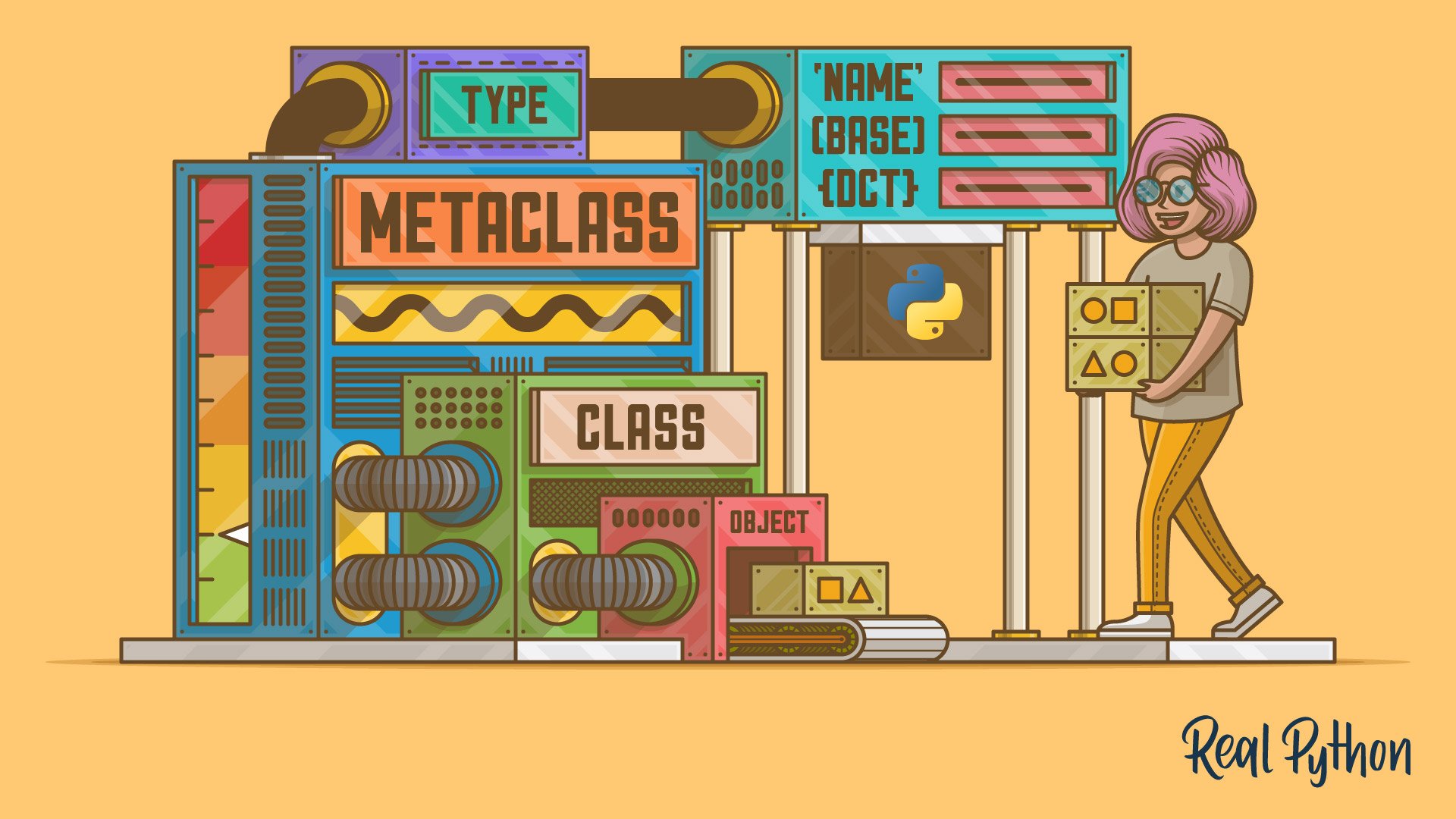
By the end, you'll understand the mechanics behind every Python class and be equipped to design more flexible and maintainable code.
Prerequisites
Before diving in, ensure you have a solid grasp of:
- Python basics (variables, functions, loops)
- Object-oriented programming in Python: classes, instances, methods, inheritance
- Understanding of
__init__and__new__special methods - Familiarity with the
typebuilt-in function
You don't need prior experience with metaclasses—that's what we're here for!
Step-by-Step Instructions
1. Classes Are Objects
In Python, everything is an object—including classes. This means you can assign a class to a variable, pass it as an argument, or even create it dynamically. Let's demonstrate:
class MyClass:
    pass

print(type(MyClass))  # Outputs:
Here, type is not just a function—it's a metaclass. Every class you define is an instance of type (unless you change its metaclass). This is the foundation of metaclass mechanics.
2. Creating Classes with type
You can create a class on the fly using type(name, bases, dict):
MyDynamicClass = type('MyDynamicClass', (), {'x': 10}) obj = MyDynamicClass() print(obj.x) # Outputs: 10This is equivalent to writing a class statement. The three arguments are:
- name: string name of the class
- bases: tuple of parent classes
- dict: dictionary of attributes and methods
This dynamic creation shows that classes are just objects produced by type.
3. What Is a Metaclass?
A metaclass is a class whose instances are classes. By default, Python uses type as the metaclass. You can create your own metaclass by inheriting from type and overriding its methods (__new__, __init__, __call__) to customize class creation.
Custom Metaclass Example
class Meta(type):
    def __new__(cls, name, bases, dct):
        print(f"Creating class {name}")
        # Add a class attribute
        dct['created_by_meta'] = True
        return super().__new__(cls, name, bases, dct)

class MyMetaClass(metaclass=Meta):
    pass

print(MyMetaClass.created_by_meta)  # Output: True
When MyMetaClass is defined, Python passes its name, bases, and namespace to Meta.__new__. We added an attribute to the class. This is how metaclasses can inject behavior or enforce rules.
4. Practical Usage: Validating Attributes
Suppose you want all classes in your framework to have a specific method, or you want to enforce naming conventions. A metaclass can check at class creation time:
class ValidateMeta(type):
    def __new__(cls, name, bases, dct):
        if 'required_method' not in dct:
            raise TypeError(f"Class {name} must define 'required_method'")
        return super().__new__(cls, name, bases, dct)

class GoodClass(metaclass=ValidateMeta):
    def required_method(self):
        pass

# class BadClass(metaclass=ValidateMeta):  # This would raise TypeError
#     pass
This pattern is used in frameworks like Django's models or SQLAlchemy's ORM to enforce structure.
5. Metaclass Versus Decorators
Often, a class decorator can achieve similar results more simply:
def add_attribute(cls):
    cls.added = True
    return cls

@add_attribute
class Decorated:
    pass

print(Decorated.added)  # True
Use a decorator when you only need to modify a class after creation. Use a metaclass when you need to control the entire creation process, especially if the behavior must apply to a hierarchy of classes.
6. When to Use Metaclasses
Metaclasses are powerful but should be used sparingly. Consider them when:
- You need to automatically register classes (e.g., plugin systems)
- You want to enforce constraints across a class hierarchy
- You're building a framework that alters class behavior at creation time
- Simple decorators or inheritance don't cut it
If you can solve the problem with a simpler technique (decorator, mixin, inheritance), do that first. Metaclasses increase complexity and can confuse readers.
Common Mistakes
Overusing Metaclasses
Many developers reach for a metaclass when a simple decorator or mixin would work. Keep it simple.
Forgetting super() Calls
In __new__ or __init__ of a metaclass, you must call super() to properly create or initialize the class. Otherwise, the class may not be created correctly.
class IncorrectMeta(type):
    def __new__(cls, name, bases, dct):
        # Forgot super() – the class won't be created!
        return None  # Wrong
Confusing __new__ and __init__ in Metaclass
__new__ is responsible for creating the class object (called before the class exists). __init__ is called after creation to initialize it. Use __new__ for modifications to the class dictionary, and __init__ for post-creation setup (like logging).
Assuming Metaclasses Affect Instances
Metaclasses affect the behavior of classes, not the instances of those classes. To modify instance creation, override __call__ on the metaclass.
Summary
Metaclasses are a deep but essential concept for mastering Python's object model. You learned that classes are objects created by type, that custom metaclasses inherit from type and can intercept class creation via __new__ and __init__, and that practical uses include validation, registration, and framework construction. Remember to prefer simpler alternatives where possible, and always call super() in your metaclass methods. With this knowledge, you can design Python code that is both elegant and powerful.
Related Articles
- Flexible SQL Parameterization in Python: How mssql-python Supports Both Named and Positional Placeholders
- Secret Google TV Settings Revealed: Boost Your Slow Smart TV Instantly Without New Hardware
- 8 Key Insights into Python 3.15.0 Alpha 6: What Developers Need to Know
- Go Developer Survey 2025: AI Tool Use Rises, But Quality and Documentation Gaps Persist
- Mastering Asynchronous Node.js: From Callbacks to Promises
- Automating Intellectual Toil: Agent-Driven Development at Copilot Applied Science
- How GDB's Source-Tracking Breakpoints Save Your Debugging Sanity
- Python 3.15 Alpha 6 Arrives with Performance Boosts and New Profiler