Vera C. Rubin Observatory: Unlocking the Secrets of a Changing Cosmos
Introduction: A New Era of Sky Surveillance
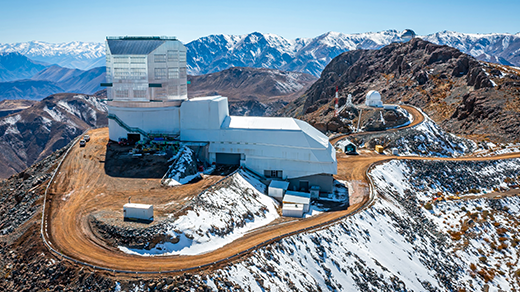
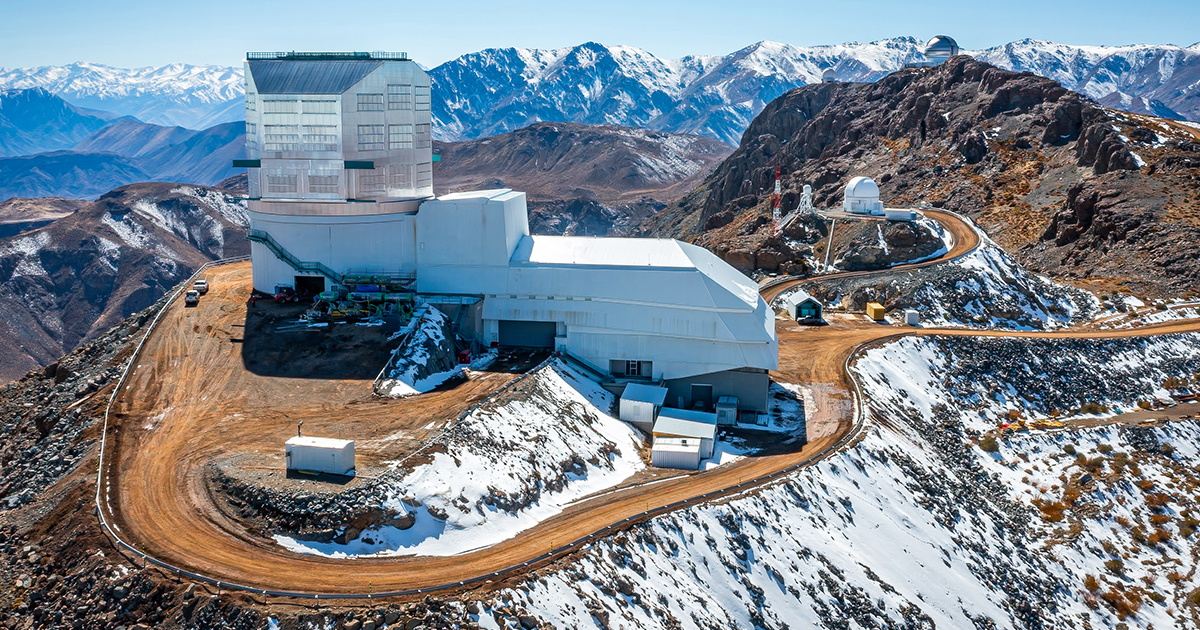
Perched high in the Chilean Atacama Desert, the Vera C. Rubin Observatory is poised to revolutionize how we observe the universe. Conceived in the mid-1990s as the Dark Matter Telescope, this ambitious project has evolved into a machine designed to capture the night sky in unprecedented detail. Over a decade of operations, Rubin will image the entire southern sky every few days, creating a time-lapse movie of the cosmos that promises new insights into asteroids, supernovae, interstellar objects, and much more.
Hunting for City-Killer Asteroids
One of Rubin's most critical missions is the detection and tracking of potentially hazardous asteroids. By scanning the sky repeatedly, the observatory will identify objects as small as a city block or a skyscraper – known as "city-killer" asteroids – that could pose a threat to Earth. With its powerful 8.4-meter mirror and 3.2-gigapixel camera, Rubin can spot faint, fast-moving rocks that previous surveys might miss. This capability not only helps refine our catalog of near-Earth objects but also provides crucial data for future planetary defense missions.
Mapping the Solar System's Debris
Beyond immediate threats, Rubin will chart the orbits of millions of asteroids in the main belt between Mars and Jupiter. Understanding these bodies' distribution and composition sheds light on the early solar system's evolution. The observatory's repeated imaging allows precise orbital calculations, revealing subtle gravitational nudges from larger planets and even the Yarkovsky effect – a thermal force that slowly changes an asteroid's path.
Capturing the Death Throes of Stars
Rubin's wide-field, rapid cadence is ideal for catching supernovae – stellar explosions that mark the end of massive stars' lives. Among its targets are failed supernovae: massive stars that collapse directly into a black hole without a brilliant flash. These elusive events are key to understanding how the most massive stars die and how black holes form. Rubin's sensitivity will detect the sudden dimming and disappearance of supergiant stars, providing the first statistical sample of failed supernovae.
Weighing the Universe with Supernovae
Type Ia supernovae serve as standard candles for measuring cosmic distances. By collecting thousands of such events, Rubin will map the expansion history of the universe with unprecedented precision. This data will help refine models of dark energy, the mysterious force accelerating cosmic expansion. The observatory's legacy of supernova discoveries will span billions of light-years, offering a 3D view of how the universe changed over time.
Welcoming Interstellar Wanderers
Since the 2017 discovery of 'Oumuamua and 2019's Borisov, astronomers have known that our solar system is occasionally visited by interstellar objects. Rubin's all-sky survey is perfectly suited to find more of these cosmic nomads. With its deep, repeated imaging, the observatory will detect faint, fast-moving objects that likely originate from other star systems. Each new discovery adds to our understanding of planet formation and the frequency of material exchange among galaxies.
What Their Composition Tells Us
By tracking the colors and brightness changes of interstellar visitors, Rubin can infer their composition – whether they are icy like comets, rocky like asteroids, or something entirely unexpected. The observatory will also alert other telescopes for follow-up spectroscopy, allowing scientists to probe the chemical makeup of objects from distant worlds. This process could reveal if any of these wanderers carry organic molecules, the building blocks of life.
The Road Ahead
After decades of planning and construction, Rubin is approaching first light. The observatory will begin its ten-year Legacy Survey of Space and Time (LSST) in the mid-2020s, generating 20 terabytes of data per night. That data will be made public, enabling astronomers worldwide to mine it for discoveries. From asteroid threats to stellar catastrophes to messages from other star systems, Rubin promises to reshape our view of a dynamic, ever-changing universe.
As we stand on the brink of this new window on the cosmos, one thing is clear: the Vera C. Rubin Observatory will not only track skyscraper-sized asteroids, failed supernovae, and interstellar visitors – it will help us understand our place in a universe full of motion, change, and wonder.
Related Articles
- The Solar Wind Effect: How Sun Activity Accelerates Space Junk Reentry – A Hands-On Guide
- Ireland Poised to Sign Artemis Accords in Ceremony at NASA Headquarters
- Breaking the Memory Barrier: New State-Space Model Revolutionizes Long-Term Video AI
- Understanding CSS RotateX(): Tilting Elements in 3D Space
- Ice Cycles May Have Sparked Life's First Cells, Study Reveals
- How to Analyze the Surface Composition of a Rocky Exoplanet with JWST
- Psyche's Martian Snapshot: A Crescent Like No Other
- How an AI Named RAVEN Revolutionized Exoplanet Discovery with TESS Data